
Why buyers look for a Crocheted Products Supplier
When sourcing handmade-style soft goods, a Crocheted Products Supplier is rarely just about finding “cute” inventory. Buyers are usually trying to solve a more practical problem: how to bring in products that feel crafted, differentiated, and easy to merchandise without taking on unpredictable quality or supply gaps. That matters whether the end market is gift retail, children’s room décor, hobby stores, or cross-border e-commerce.
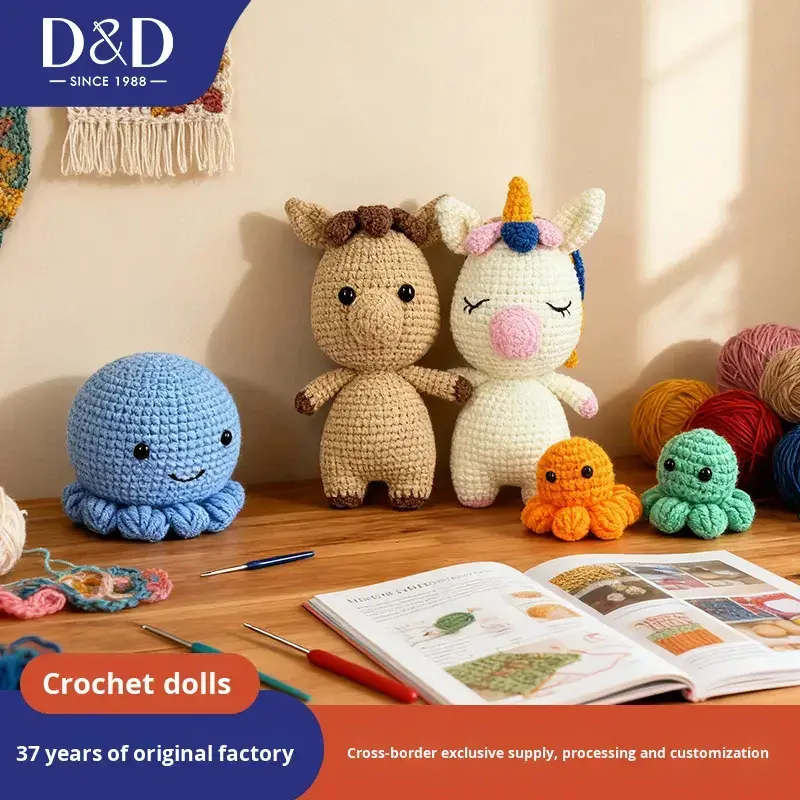
In the material provided here, the product direction is fairly clear: crochet dolls, crocheted stuffed toys, and similar amigurumi-style figures with yarn surfaces, stitched details, and small-scale animal or fantasy forms. The graphic also points to cross-border exclusive supply and processing/customization, which suggests the offering may sit somewhere between finished goods and made-to-order craft production. That distinction matters. A buyer sourcing for retail shelves does not want a one-off sample story if the real need is repeatable supply.
So the real decision is not simply “can they make crochet products?” It is whether the supplier can deliver the right mix of appearance, consistency, customization, and commercial reliability for the channel you sell into.
What these products appear to be
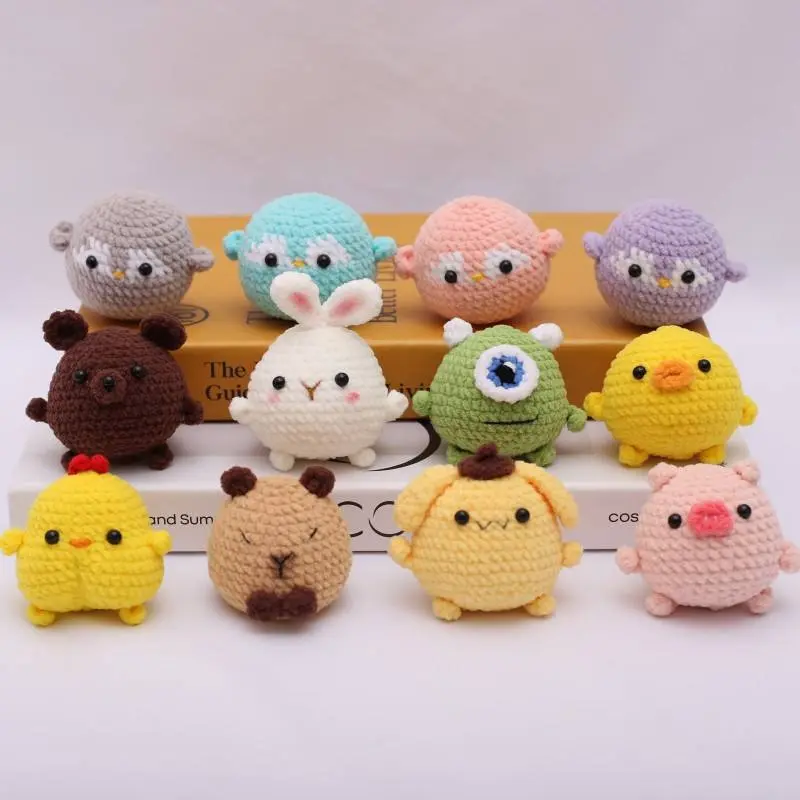
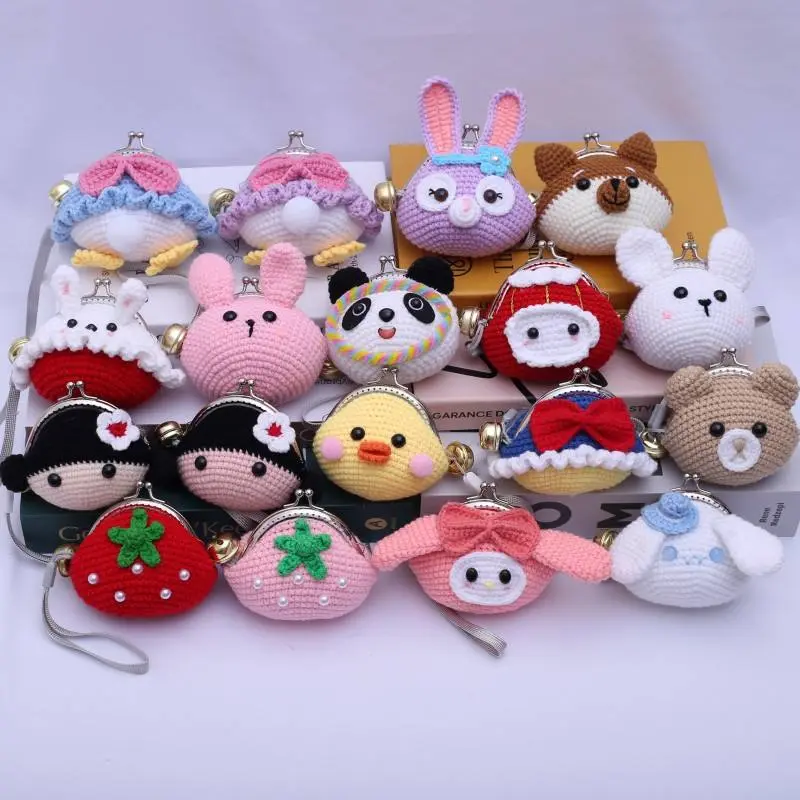
The visible assortment shows soft crochet dolls and stuffed figures in rounded, toy-like forms: unicorn-style pieces, animal shapes, octopus-like figures, and other small decorative characters. The surface texture is clearly crocheted, with visible stitches, layered appendages, embroidered facial features, and a stuffed body structure. Colorways shown include blue, beige, white, orange, and green, which is the sort of palette that usually works well in display-driven categories because it photographs cleanly and gives buyers enough variety to build a shelf story.
From a sourcing perspective, that variety can mean several different things. These may be finished handcrafted goods, sample pieces for pattern development, promotional models for crochet kits, or custom-made gift items. The source data does not prove which one, and it would be a mistake to assume. A buyer should ask directly whether the supplier is offering finished stock, OEM/ODM development, or DIY kit support. Each route changes costing, packaging, labor content, and the level of quality control required.
Quick buyer takeaways before you request a quote
If you are evaluating custom crocheted products for a catalog or retail program, a short checklist helps separate real manufacturing capability from attractive sample photos.
First, confirm whether the supplier can make stable repeat orders, not just one-off samples. Handmade categories often look simple until the buyer asks for the same shape, same stitch density, and same facial expression over multiple runs. Second, ask what part of the product is customizable: size, color, character design, accessory details, packaging, or labeling. Third, clarify whether the product is intended as décor, giftware, or a children’s item. That affects compliance questions and the level of caution a sourcing team should apply.
The provided text mentions “cross-border exclusive supply” and “processing and customization.” That language is useful, but buyers should still verify what that means in practice. Exclusive supply can refer to a market channel, a design, or a sales arrangement; it is not a substitute for a written product specification.
How to judge a crocheted product line from a manufacturing angle
1. Stitch consistency and shape retention
For crocheted stuffed toys, the stitching is not just visual texture. It affects the figure’s shape, surface tension, and the way seams hold under handling. A loose stitch pattern can create a softer look, but it may also make the outline less precise. A tighter stitch can improve definition, though it may slow production. Buyers should compare samples from more than one angle, because the front view may look neat while the sides reveal uneven stuffing or asymmetry.
2. Facial detailing and assembly quality
Eyes, mouths, ears, horns, arms, and tentacles are where many handcrafted figures either feel polished or start to look rushed. In the supplied product description, visible stitched eyes and embroidered facial details suggest hand assembly or at least hand-finished elements. That is attractive in the market, but it also means the supplier’s finishing discipline matters. Ask how those features are attached and whether there is a standard for alignment. Small inconsistencies are normal in handmade goods; large ones become a resale problem.
3. Material clarity
The product information points to yarn or cotton thread crochet work with stuffed amigurumi-style bodies, but it does not specify fiber content or filling. Buyers should not assume. In soft goods, “cotton look” and “cotton content” are not the same thing. The right question is simple: what exact yarn and filling materials are used, and can the supplier document them? Even for decorative use, this affects hand feel, durability, and customer expectations.
Where Custom Crocheted Products usually fit in the market
Custom Crocheted Products tend to perform best where the product’s handmade appearance is part of the value proposition. That includes home décor, nursery or children’s room decoration, seasonal gifts, craft retail, and curated online stores that sell by visual appeal rather than technical function. They can also work as display samples for sewing or crochet wholesalers, especially when a supplier wants to show design range rather than mass volume.
For cross-border e-commerce, these items can be appealing because they photograph well and carry a handmade story. But there is a practical warning here: attractive product imagery can hide weak repeatability. If you plan to scale a listing, ask whether the supplier can keep proportions and color matching reasonably steady across batches. Handmade categories do not need to be identical, but they do need to be recognizably the same product.
Questions to ask a Crocheted Products Supplier before ordering
Buyers often get stuck on price too early. In a crocheted product line, the better first questions are about production scope and quality control.
Ask what the supplier actually manufactures in-house. Do they produce finished dolls, basic bodies, custom characters, or crochet kits? Ask whether sampling is available for design changes. Ask how they handle revisions if the buyer wants a different horn shape, ear size, or color blocking. If the product is for retail, ask about packaging options and how the items are protected during shipping so the stitched surfaces do not flatten or snag.
The company note supplied with the brief says the supplier has 37–40 years of manufacturing history and offers customization. That is significant if accurate, because long-running craft production often means the team understands repeat handwork, not just pattern making. Still, buyers should verify the scope of that experience. Years in manufacturing do not automatically mean the supplier can meet modern retail documentation, export packing, or channel-specific labeling requirements.
Common mistakes buyers make with handmade-style soft goods
The most common mistake is treating a crocheted figure like a standard molded toy. It is not. The production logic is different. Handwork introduces normal variation, and that variation needs to be allowed for in the spec. Another common error is approving a sample too quickly because it looks charming. A cute sample does not tell you whether the supplier can maintain the same stuffing density, seam finish, and facial placement across a larger order.
There is also a tendency to under-specify the intended use. A figure sold as decoration is not the same as one sold for play. That distinction can influence compliance, labeling, and even buyer expectations from wholesalers or marketplace platforms. If you are not sure which route you are taking, define it before you negotiate quantity.
Practical buyer advice for sourcing and customization
If you are approaching a supplier for the first time, start with a limited design brief rather than a broad wish list. Provide target size range if you have one, preferred color family, intended use, and whether you need a finished product, a sample series, or a custom development project. The more visual reference you provide, the easier it is for a handcraft supplier to understand the character shape you want.
For procurement teams, it helps to request photos of multiple angles and, if possible, several units from the same batch. That tells you more about real production consistency than a polished studio image. Ask for one sample that is intentionally representative and one that is closer to normal production output. The gap between those two can be very informative.
If the supplier emphasizes processing and customization, use that as a starting point, not a final answer. You still need to know whether the production model is artisan-heavy, semi-manual, or supported by standardized templates. That affects lead planning, order scaling, and the amount of buyer-side inspection you will need.
FAQ
Are these products finished toys or craft samples?
Based on the supplied information, they could be either finished decorative goods, sample pieces, or items tied to DIY crochet offerings. The source material does not confirm which one, so buyers should ask directly.
Can crocheted figures be customized?
Usually yes, especially when the supplier promotes customization. Common options include color changes, character shape adjustments, size changes, and accessory variations. The exact scope depends on the supplier’s production setup.
What should I verify first?
Start with material details, customization range, batch consistency, and intended use. If the product is going into retail, ask about packing and handling as well, because soft yarn surfaces can be damaged in transit.
Why are these products attractive for cross-border sales?
They are visually distinctive, giftable, and easy to present in lifestyle photography. That said, the handmade look can be a strength only if the supplier can keep production reliable enough for repeat listings.
What to do next
If you are looking for a Crocheted Products Supplier, the next step is to narrow the brief before you ask for quotes. Decide whether you need decorative crochet dolls, stuffed figures, custom characters, or a kit-oriented product line. Then request sample photos, material details, and a clear explanation of what can be customized. That will tell you far more than a generic “yes, we can do it.”
For buyers in giftware, décor, and cross-border commerce, the value is in finding a supplier who can make these pieces look handmade without making your purchasing process feel improvised. That balance is where a good crocheted product partner earns its place.