
Why a Cross Stitch Factory Matters to Buyers of Small Craft Kits
If you are sourcing a Cross Stitch Factory product, you are usually not shopping for just a pretty hobby item. You are deciding whether a kit can be assembled consistently, packed cleanly, and sold without creating customer confusion or returns. That matters whether you are buying for a retail shelf, a gift shop, a classroom bundle, or a private label craft line.
Small embroidery kits look simple from the outside, but they depend on a lot of controlled details: the printed pattern on the fabric, the tension of the hoop, the clarity of the thread colors, the presence of a usable needle, and the way the kit is packed so nothing goes missing. A good product is easy for a beginner to open and start. A weak one becomes frustrating within minutes. That is the real sourcing problem.
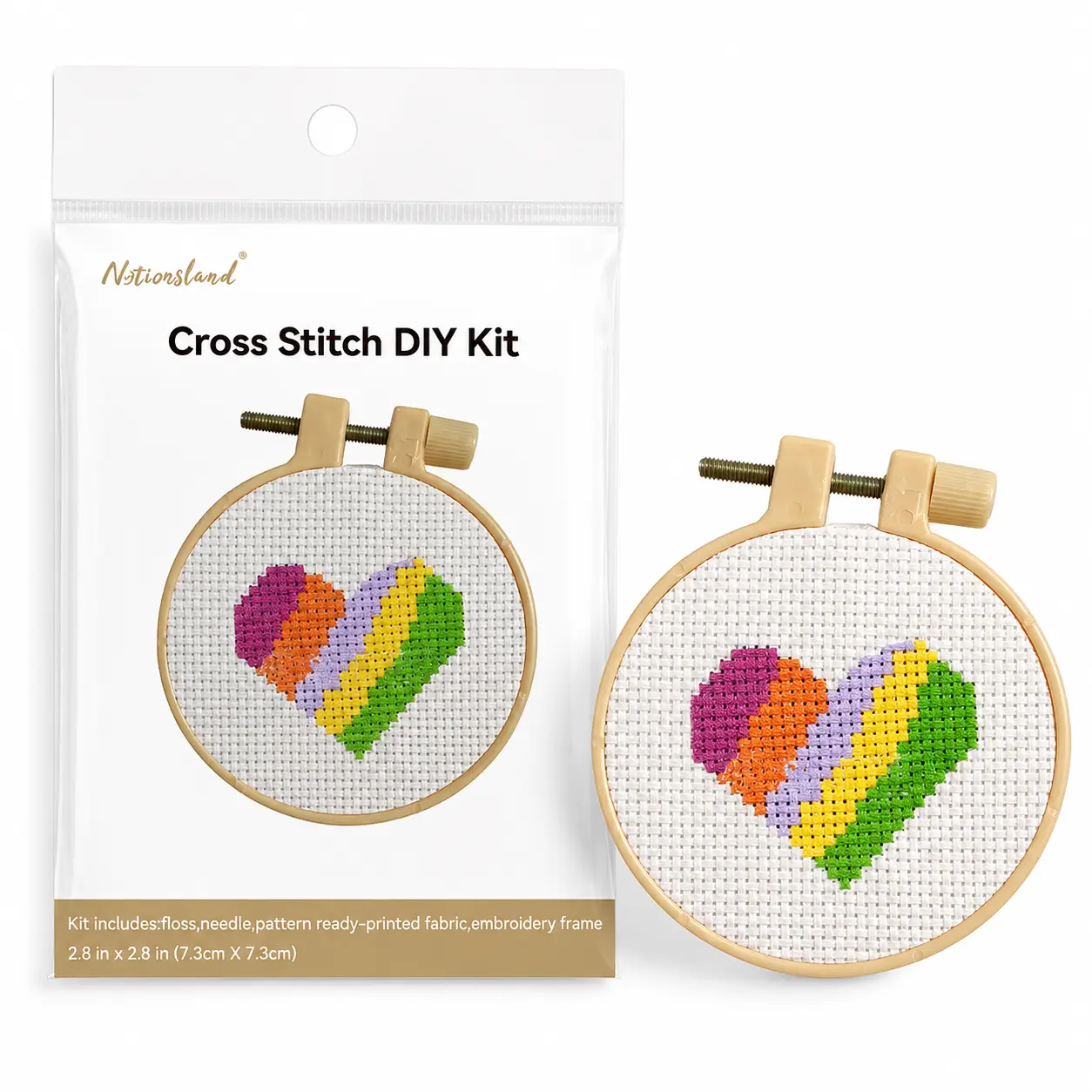
The product data here points to a compact DIY cross-stitch heart kit branded Notionsland, with a round embroidery hoop, pre-printed white fabric, floss in several colors, a needle, and a stated finished size of 2.8 in x 2.8 in, or 7.3 cm x 7.3 cm. That size tells you a lot. This is not a large wall piece or a complex counted-stitch project. It is a small decorative item, likely aimed at quick gifting or beginner-friendly crafting. For buyers, that means the decision is less about scale and more about presentation, simplicity, and kit completeness.
What the Kit Appears to Include, and Why That Matters
Based on the provided information, the kit includes a round hoop/frame, pre-printed embroidery cloth, cross-stitch floss, a needle, and a printed pattern or printed guide on the fabric. Those are the essentials. The reason this matters is simple: beginners do not want to source missing parts one by one. They want to open the pack and start stitching.
The hoop appears to have a light wood or wood-look finish with a screw-tightened clamp at the top. That detail may seem minor, but it affects both function and shelf appeal. A clean-looking hoop gives the kit a handmade, giftable character. The tightening screw also matters because it helps hold the fabric taut, which is important for neat stitches and a smoother finished look. If the hoop slips or distorts the cloth, the buyer notices quickly.
The fabric is described as white woven embroidery cloth. White ground fabric is common in beginner kits because it makes colored thread easy to read and helps the printed guide stand out. The visible thread colors include magenta or pink, orange, lavender, yellow, and green. That palette suggests a cheerful decorative heart design rather than a technical or traditional sampler. For retail buyers, that means the item may sell on impulse if the front-of-pack design is clear and the finished result is easy to imagine.
Quick Buyer Takeaway: This Is a Small, Display-Friendly Craft Kit
Not every cross-stitch product serves the same market. This one appears built for a lightweight, low-risk purchase: a small beginner craft, a quick handmade gift, or a desk-sized ornament. That makes it suitable for gift shops, impulse retail, and hobby sections where customers want something approachable rather than a multi-week project.
The compact size is a selling point, but only if the kit feels complete and readable. Small kits can underperform when the printed pattern is too faint, the thread count is confusing, or the package makes the project look harder than it is. Buyers should look closely at how much guidance the kit gives the end user. A first-time stitcher needs reassurance. A trade buyer needs fewer complaints.
How Cross Stitch Kits Are Typically Built
From a manufacturing point of view, a cross stitch kit combines textile prep, printing, assembly, and packaging. The fabric is prepared first, then the pattern is printed or transferred onto it. After that, the floss, needle, and frame are bundled together. The final step is packaging, which is where many products succeed or fail in the retail environment.
For a product like this, the printed design needs to remain visible enough for the buyer to follow, but not so heavy that it obscures the stitching. That balance is often overlooked. If the print is too bold, it can show through the finished piece. If it is too light, beginners may lose track of the design before they finish. This is one of those practical details that does not sound glamorous but drives customer satisfaction.
The hoop itself may be wood or a wood-look component; the provided information does not verify the exact base material. Still, the finish matters because consumers tend to judge these kits visually before they judge them technically. A smooth, natural-looking frame usually reads as more premium than a rough or overly glossy one. For sourcing teams, that impression can be the difference between a craft item that feels giftable and one that feels like a school supply.
What Makes a Good Cross Stitch Supplier for These Kits
If you are evaluating a Cross Stitch Supplier, the obvious question is whether they can provide the materials. The better question is whether they can provide the same experience, repeatedly, at scale. For these kits, consistency matters more than flashy claims.
Look for suppliers that can hold color consistency across thread batches, keep fabric printing legible, and pack contents so the needle and floss do not shift around inside the bag. That last point sounds trivial until you receive a carton of kits with damaged packaging or scattered contents. Small kits are fragile from a merchandising standpoint.
It is also worth asking how the supplier handles instructions. A beginner-oriented product should not assume the buyer already knows stitch order, thread separation, or how to read a chart. Even if the design is simple, clear instructions lower the barrier to purchase. That is especially important if the kit is sold as a gift or in a general retail setting rather than a specialty needlework shop.
Selection Criteria That Matter More Than Buyers Expect
1. Readability of the pattern
The printed guide on the fabric should be clear enough to follow without eye strain, but not so heavy that it ruins the finished appearance. This is probably the single most important quality point for a beginner kit.
2. Completeness of the contents
A kit that includes the hoop, floss, needle, and pre-printed fabric is far easier to sell than one that requires extra purchases. Buyers do not like surprises, and retail customers dislike them even more.
3. Size and display value
The stated finished size of 2.8 in x 2.8 in is small, which can be an advantage. It suggests a quick project and a neat finished piece that can sit on a shelf or desk. But small also means every visual detail has to work harder.
4. Packaging clarity
People often buy these kits because they can picture the end result in a few seconds. Packaging should show the design plainly and avoid clutter. A buyer who cannot tell what the kit produces usually moves on.
Common Mistakes When Sourcing Decorative Stitch Kits
One common mistake is treating all craft kits as interchangeable. They are not. A cross stitch kit for a novice, especially one built around a small heart design, needs a different level of clarity than a more advanced embroidery product. Another mistake is overestimating how much detail a customer wants. Too many components, too much text, or a confusing layout can make a simple product feel exhausting.
Buyers also sometimes focus only on cost and ignore the frame quality. That is a mistake for retail-facing products. If the hoop looks cheap or the clamp does not hold well, the end user notices immediately. And when the stitch work is uneven because the fabric slipped, the blame usually lands on the kit, not on the beginner.
One more caution: do not assume the color mix will sell itself. The visible palette here is lively, but the success of a kit depends on how well the colors are coordinated with the printed heart design. Strong colors can help, but only if they are arranged in a way that still feels tasteful after stitching.
Practical Advice for Retail, Gift, and Private Label Buyers
If you are buying for retail resale, think about who will pick this up: a casual crafter, a parent looking for a small gift activity, or a shopper browsing the craft aisle for something low-commitment. That customer wants a low-friction experience. They want to know exactly what they get and what the finished piece will look like.
For gift-oriented channels, small square or circular kits like this work best when the packaging communicates that the project is quick and beginner-friendly. For private label programs, consistency in print, thread color, and packaging insert quality matters more than a long product story. The story is on the shelf; the product has to carry it.
Also, be realistic about user expectations. A buyer may think “small” means “easy,” but even a simple cross-stitch project can become frustrating if the kit lacks a clean guide. So when reviewing samples, actually open them, inspect the print, and check whether the instructions make sense without specialist knowledge. That small step saves a lot of customer service work later.
FAQ
Is this kit suitable for beginners?
It appears to be beginner-friendly, especially because it includes the main materials and is relatively small. That said, the actual ease will depend on the clarity of the printed pattern and instructions.
Is the hoop made of wood?
The hoop appears light-colored and wood-like, but the provided information does not confirm whether it is solid wood, bamboo, or another material. Buyers should verify material if that affects positioning or compliance.
What is the finished size?
The stated finished size is 2.8 in x 2.8 in, or 7.3 cm x 7.3 cm.
What kind of buyer is this best for?
It fits hobby retail, gift shop resale, and small decorative craft assortments. It also suits buyers looking for a compact, simple stitching project rather than a large embroidery set.
What to Ask Before You Place an Order
Before you commit to volume, ask for a sample and inspect four things: whether the printed pattern is readable, whether all listed components are included, whether the hoop holds tension properly, and whether the packaging protects the contents during transit. If the supplier can answer those questions clearly, you are already ahead of the average buyer.
For a product like this, the best sourcing decisions are rarely about dramatic specifications. They are about small, repeatable details that protect the end-user experience. That is what separates a craft kit that gets opened and finished from one that sits in a drawer.
Next Step for Buyers
If you are evaluating a Cross Stitch Factory product for resale or private label, start with the sample, not the catalog photo. Check the kit contents, inspect the print quality, and confirm how the design presents once stitched. A small cross-stitch heart kit may look simple, but simple products are often the most sensitive to weak execution. The right supplier makes the process feel easy; the wrong one turns a tiny decorative project into a complaint generator.