
What a Crocheted Products Supplier Should Be Able to Deliver for Novelty Plush Figures
When buyers search for a Crocheted Products Supplier, they are often not just looking for a craft vendor. They are usually trying to solve a sourcing problem: how to turn a soft, handmade-looking idea into a product line that can be sold, gifted, displayed, and reordered without losing the charm that made it attractive in the first place. That is especially true for custom novelty plush figures such as amigurumi-style dolls with printed message signs. They sit somewhere between toy, decoration, and collectible, which makes the sourcing decision a little less straightforward than it looks at first glance.
These products matter because they sell on emotion as much as on form. A buyer is not only purchasing yarn, stuffing, and a stitched face. They are buying a small object that can carry humor, fandom, seasonal appeal, or desk-side personality. For sourcing managers and product teams, the real question is whether the supplier can repeat that look consistently, adapt the design without breaking the style, and handle the practical details that make a novelty item commercially viable.
Why crocheted novelty products are harder to source than they look
At first glance, a seated plush figure with oversized features and a little placard seems simple. In practice, it combines several production variables at once: crochet or knit-style construction, shaped stuffing, facial embroidery or stitching, accessory assembly, and text application on the sign. Each part has its own failure points.
The surface needs to look handmade rather than sloppy. The body shape has to stay recognizable from one variant to the next. The sign must sit neatly on the front, because even a good figure can look unfinished if the message board is crooked or poorly attached. And if the product line includes multiple characters or themes, the supplier must manage visual consistency while still allowing variation.
That is why buyers should treat the choice of a Crocheted Products Supplier as both a creative and manufacturing decision. A good supplier understands the product category, but a better one understands repeatability, assembly flow, and how a small decorative item moves through sample approval into bulk production.
What the product category is really doing in the market
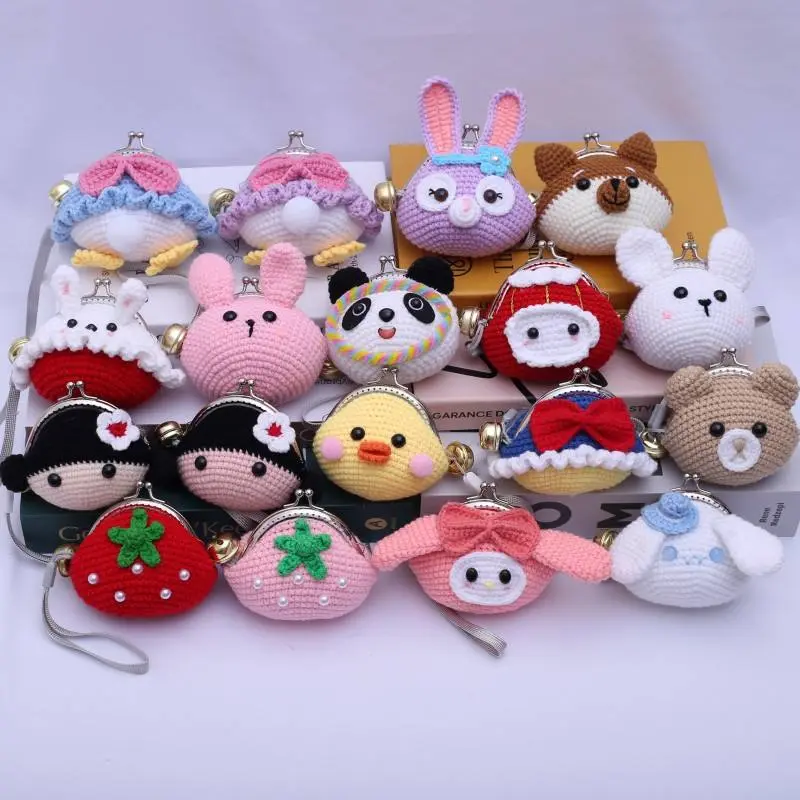
The figures in this style are compact, palm-sized novelty items with a soft, textured finish and a seated display posture. They are best understood as giftable décor or fandom collectibles rather than functional products. In the market, they can serve several different purposes:
- impulse-buy gifts
- desk or shelf décor
- seasonal Halloween-adjacent merchandise
- craft fair or souvenir items
- fandom humor products
That mix matters because it changes how a buyer should brief the supplier. A product intended for a souvenir rack may need stronger visual shelf appeal. A product aimed at online gift shoppers may need a cleaner finish and more legible messaging. If it is sold as a collectible set, then the full range of variants becomes part of the product story.
Custom Crocheted Products: what can be customized, and what should be confirmed first
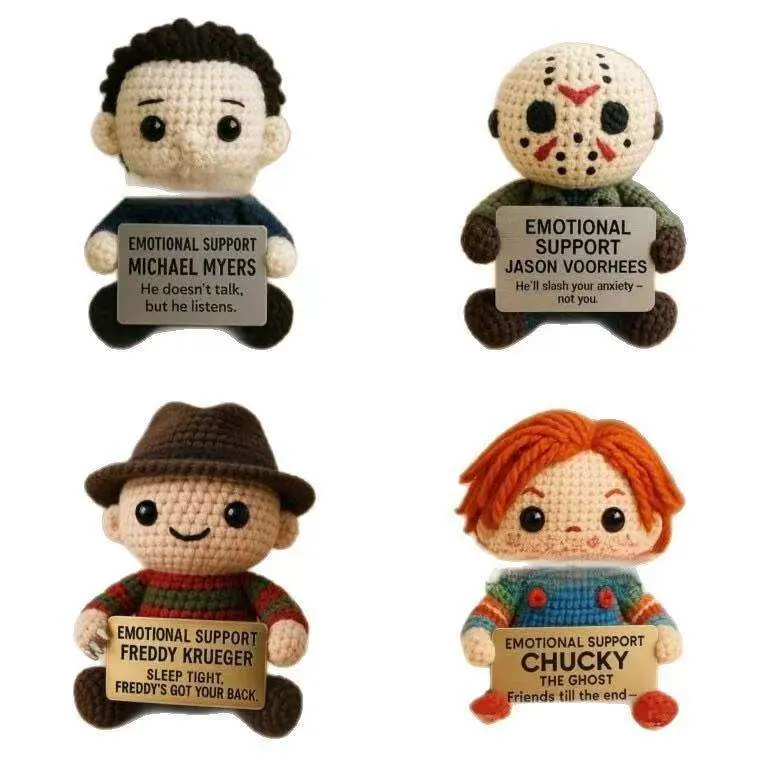
For custom crocheted products, the obvious starting point is character appearance. In the figures described here, the style is clearly inspired by recognizable horror-film personalities and packaged with “emotional support” humor branding. That kind of design can be commercially effective, but buyers should be careful about rights and approvals before moving too far into production. If a design is based on a character, image, or franchise that may require licensing, that issue should be resolved before tooling, sampling, or promotional content goes too far.
Once the legal side is cleared, customization usually falls into a few practical buckets:
1. Color and yarn texture
The visible finish is matte and textured, which suggests a craft-forward look. Buyers should confirm whether the yarn weight, stitch density, and color matching can be held across the set. Small changes in fiber tone can make two figures feel like they came from different product families.
2. Facial features and body proportions
Oversized heads, round black eyes, stitched mouths, and small limbs are part of the appeal. Those proportions need to be preserved carefully during sampling. If a supplier “tightens up” the pattern too much, the character can lose its charm. If the proportions drift in bulk production, the product line will look inconsistent on the shelf.
3. Sign design and message application
The front placard is not decorative fluff; it is a core part of the concept. Buyers should ask how the text is applied, whether the sign is printed or otherwise finished, and how securely it is attached to the figure. A wavy, tilted, or fading placard can undermine the whole joke.
4. Packaging presentation
No packaging details are verified here, but for novelty plush figures, packaging often affects perceived value almost as much as the product itself. A supplier should be able to advise whether the item ships as a loose display piece, in a protective sleeve, or in a gift-ready box format.
How to evaluate a supplier before placing a real order
A buyer does not need to be a crochet expert to ask the right questions. In fact, a practical supplier review usually starts with the sample itself.
First, look at stitch regularity and shape retention. Handmade-style products should look intentional, not rough. If the seams are uneven in a way that weakens the character silhouette, that is a production issue, not a quirk.
Second, check whether the figure can stand or sit neatly in a display position. The visible form suggests seated posture and likely self-standing presentation, but that should be verified rather than assumed. A figure that slumps in transit or on a shelf becomes harder to sell.
Third, assess the sign. The placard should be proportionate to the body, readable at retail viewing distance, and attached in a way that does not make the plush look front-heavy.
Fourth, ask for variant control. The image shows at least four variants, which suggests the supplier may already be working with a multi-SKU approach. That is useful, but only if the details remain consistent from one character to another.
Common sourcing mistakes buyers make with crochet-style novelty items
One common mistake is treating these products like generic plush toys. They are not generic. Their value is in the hand-crafted appearance and the character-driven design. If a supplier smooths out the details too much, the product can lose the very quality that makes it sell.
Another mistake is ignoring the sign as a manufacturing component. Buyers sometimes approve the figure first and leave the text element until later. That usually causes trouble. The sign can affect front balance, brand tone, and even production yield if it requires a separate finishing step.
A third mistake is asking for too many design changes too early. With custom crocheted products, every adjustment to proportions, expression, or accessory shape can require a fresh sample cycle. It is better to lock the core silhouette first, then refine the message or decorative details.
And one more caution: if the product references licensed characters or obvious parodies, buyer teams should not assume the supplier has the right to produce or export them. That is a business risk, not a small footnote.
What a useful supplier conversation should cover
A solid discussion with a Crocheted Products Supplier should go beyond “can you make this?” and move into production detail. Buyers should ask about:
- sample development process
- stitch and shape consistency across variants
- attachment method for the sign or placard
- ability to reproduce facial features cleanly
- options for custom themes or seasonal editions
- order quantity flexibility for test runs or larger batches
It also helps to ask whether the product is made fully by hand, partly machine-assisted, or finished by hand after a base process. The exact method is not obvious from the product image, and buyers should not guess. That distinction affects pricing, lead time planning, and repeatability.
Practical buyer advice for sourcing custom plush figures
If your team is considering custom crocheted products for gift retail or promotional merch, start with the business use case. Are you buying for novelty appeal, for fandom tie-ins, or for seasonal volume? The answer changes what matters most.
For gift buyers, visual charm and packaging usually matter more than technical complexity. For product teams, consistency and reorder stability matter more. For sourcing managers, the question is whether the supplier can maintain a clear pattern language across multiple designs without drift.
It is also worth asking for one comparison sample across variants. When a product line includes several characters, the differences should feel intentional, not accidental. One sample can reveal whether the supplier understands the family resemblance that holds the collection together.
FAQ: short answers buyers usually need
Are these figures toys or decorations?
Based on the visible design, they read more like novelty decorative plush figures or gift items than functional toys. Final classification depends on the intended market and compliance requirements.
Can the design be customized?
Usually yes, within the limits of the crochet style, but buyers should confirm what can be changed without altering the core look.
Should I request a sample first?
Yes. For this category, samples are important because texture, proportion, and sign placement all affect shelf appeal.
Is licensing an issue?
It may be. If the design draws from recognizable characters or franchises, buyers should verify rights before ordering.
Choosing the right supplier for this kind of product
The best Crocheted Products Supplier for a line like this is not just the one that can crochet neatly. It is the one that can translate a playful concept into a repeatable product with clear front-facing appeal, stable construction, and enough flexibility for custom themes. That is the difference between a one-off craft item and a product that can actually be merchandised.
If you are planning a first order, the sensible next step is to request a sample specification that covers body shape, facial details, sign format, and variant list. Keep the brief tight, because loose instructions tend to create expensive surprises later. Then compare samples not just for appearance, but for how well the supplier has preserved the original idea.
For buyers looking to develop Custom Crocheted Products in this category, the right partner should be able to balance handmade character with production discipline. That balance is what makes a small plush figure worth buying twice.