
What buyers should know before sourcing a Crocheted Products Supplier
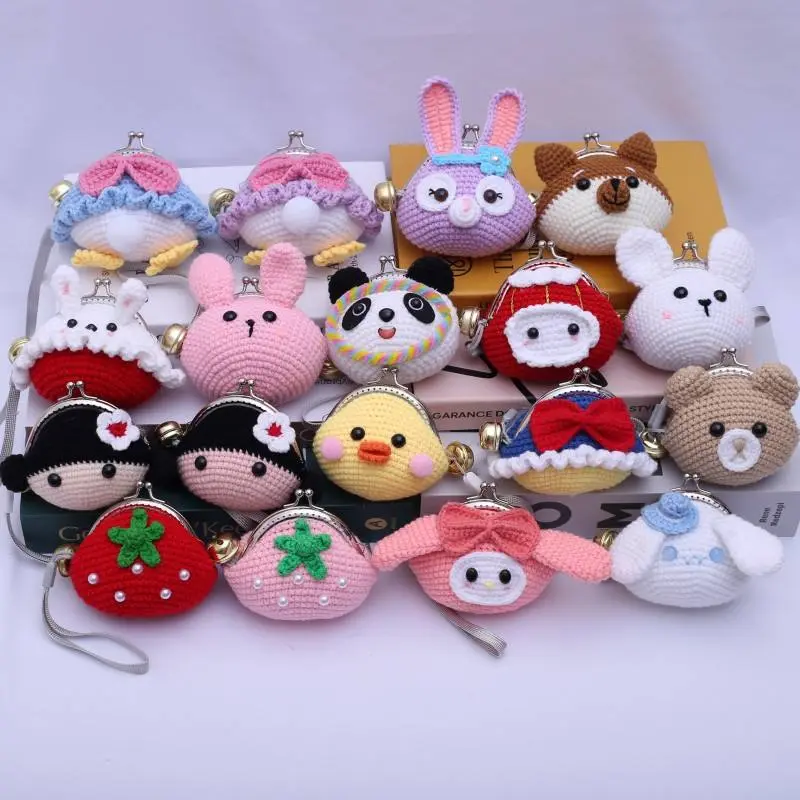
A Crocheted Products Supplier is not just a needlecraft vendor. For sourcing teams, it is usually a partner that has to balance hand-crafted appearance, repeatability, packaging, and shelf appeal in one small product line. That matters most when the item is meant to do more than decorate a shelf. The crocheted figurines in this category are compact faith-themed gifts and tabletop ornaments, each with a printed message card attached to the front. They are the sort of product that can sit in a gift shop, a Christian bookstore, a church retail counter, or even on an office desk without feeling out of place.
That mix of emotional appeal and merchandising utility is exactly why buyers need to look closely at construction, presentation, and consistency. A product can be charming in a single photo and still be awkward to stock if the stitching varies too much, the message card placement is inconsistent, or the overall form does not stand upright well. For sourcing managers, the decision is not simply whether the item looks cute. The real question is whether the supplier can deliver a line that is stable enough for retail and differentiated enough to sell.
What these crocheted gift items are, and why they sell
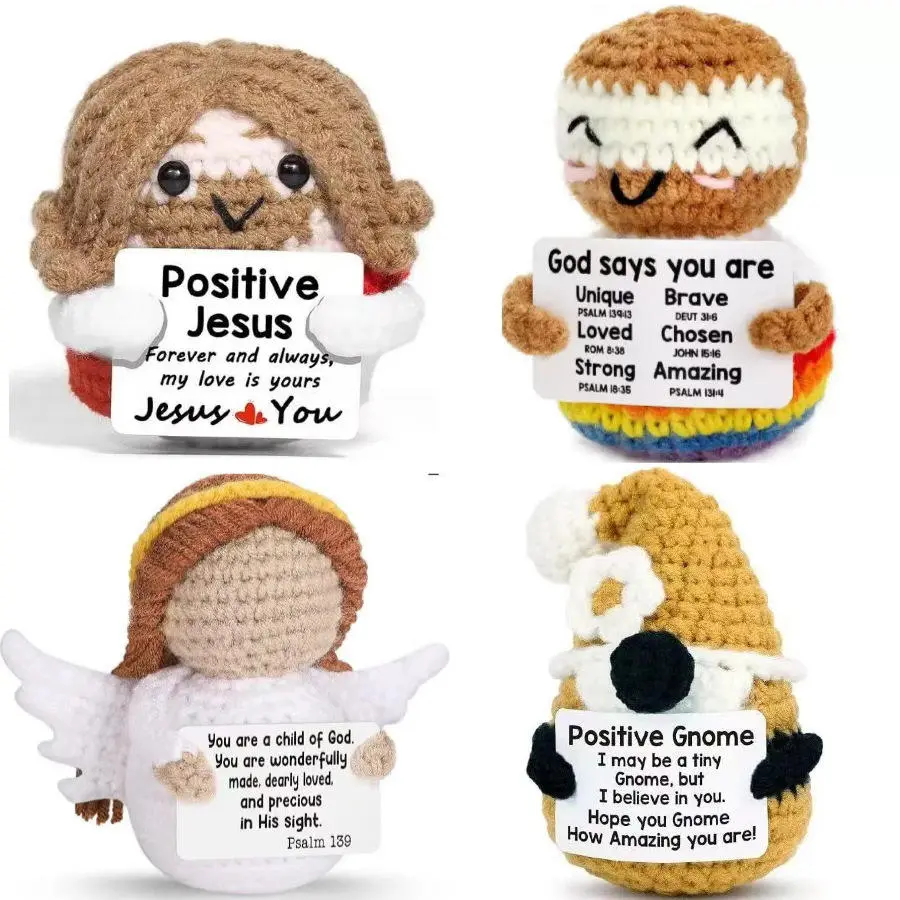
The product style here is easy to recognize: small crocheted or knitted decorative figurines with rounded, plush-like bodies, visible yarn texture, simple facial features, and a message placard on the front. The designs shown include four distinct variations, each with its own theme. One reads “Positive Jesus,” another uses a longer encouragement format with words like “Unique,” “Loved,” “Strong,” “Brave,” “Chosen,” and “Amazing,” while another says “You are a child of God.” A fourth carries a “Positive Gnome” theme.
That combination is useful for buyers because it gives a retailer several merchandising angles at once. The figures can be sold as inspirational gifts, seasonal faith decor, desk ornaments, or small items in a church bookstore display. The message card adds a direct emotional hook. In gift retail, that matters. A shopper may not remember the yarn texture first, but they will remember a short phrase that feels personal enough to hand to a friend.
Quick buyer takeaways
If you are evaluating this kind of line, a few practical points usually decide whether it is worth moving forward:
The product needs to look stable and finished from arm’s length, not just in close-up.
The message card should be legible, centered, and consistent across the batch.
The yarn surface and stuffing need to hold the intended shape so the figurine does not slump on a shelf.
The design should fit the retail channel. A church gift shop can take a more explicit faith message; a general gift store may want a softer, more universal tone.
The supplier should be able to produce variation without making each item feel unrelated.
That last point is easy to overlook. Custom Crocheted Products often work best when the collection has a common body style and small changes in face, color, accessory, or message. Otherwise the line looks like unrelated samples rather than a family of products.
Construction details that affect retail performance
From the visible product details, these figurines appear to use a soft textile surface with looped stitch texture and a stuffed form that helps them hold shape. The shape language is simple: rounded bodies, small arms or hands, and stylized human, gnome, or angel-like forms. That simplicity is not a weakness. In fact, it is often what makes these items work on a shelf. The eye reads them quickly.
For buyers, the important part is not whether the item is “handmade-looking” in the abstract. It is whether the details are controlled. Face placement, message card alignment, and the consistency of yarn density can change the perceived quality a lot. A slight variation is acceptable, even desirable, in a craft-style product. But if every piece looks different in a way that affects posture or readability, retail complaints usually follow.
The message card is also a functional component, not just decoration. It turns a generic craft ornament into a themed gift. That means the printing quality, card stock feel, and attachment method matter. A curled card or one that shifts on the product can make the whole item look less finished. Buyers should ask how the insert is fixed in place and whether the visual placement is repeatable.
Where this category fits in the market
This kind of item sits between handmade craft goods and mass-market giftware. That in-between position can be an advantage. It gives stores a product that feels personal without requiring the price profile of a fully handmade one-off. It also gives distributors something easy to merchandise by message rather than by function.
Typical use cases include:
Gift shops that need small impulse items with a faith message
Christian bookstores looking for desk-sized encouragement gifts
Church retail counters and event tables
Seasonal displays tied to Easter, Christmas, or general encouragement themes
Promotional religious merchandise for ministries and outreach programs
The caution here is channel fit. A strong faith message can be an asset in the right setting and a constraint in the wrong one. Buyers should think about who will see the product first and what kind of wording they can comfortably carry in their assortment.
How to evaluate a supplier before placing an order
When reviewing a Crocheted Products Supplier, the first thing to verify is product consistency across multiple designs. A supplier may be able to make one strong sample, but the real test is whether all four or more variants share the same level of finish.
Ask for clear sample photos from several angles. You want to see the underside, the attachment point for the placard, and the back of the figure. A front-only image can hide problems with balance or construction. If the item is meant for tabletop use, it should stand reliably without awkward leaning. That sounds obvious, but it is a common weak spot in small textile novelty goods.
Also check how the supplier handles customization. With Custom Crocheted Products, buyers often want small changes: a different message card, a different accent color, a new phrase for a seasonal promotion, or a variation for a denomination-specific audience. The best suppliers can adjust those details without changing the product identity completely. If every small revision requires a full redesign, the line will be hard to scale.
Questions worth asking early
What parts of the product are fixed, and what can be customized?
Are the message cards printed separately and then attached, or built into the assembly process?
Can the supplier maintain consistent face placement and body shape across a full order?
How are the items packed to prevent crushing or distortion during shipping?
Can the supplier produce a matched set of designs under one collection theme?
Those questions sound basic, but they save time later. Craft-style products can look simple while hiding a lot of production coordination.
Common sourcing mistakes
The biggest mistake is treating the item like a generic plush toy. It is not. It is a small decorative message carrier, and that distinction changes what matters. Softness alone is not enough. The card, the wording, and the retail context all contribute to sell-through.
Another common error is over-specifying the product too early. Buyers sometimes demand exact dimensions, exact fiber content, or exact production methods before they have even agreed on the style direction. Those details matter eventually, but the first decision is usually whether the concept fits the store and the audience.
A third issue is underestimating packaging. Small figurines with attached cards can be damaged by pressure, bent inserts, or shifting accessories. If the product is sold as a gift, presentation is part of the product, not an afterthought.
Practical advice for retail and promotional buyers
If you are buying for retail, start by choosing the message style before the color palette. In this category, the words do a lot of the selling. “You are a child of God” speaks differently from “Positive Gnome,” and both serve different shelf roles.
If you are buying for promotions, consider whether the product can carry a branded insert without losing its charm. In some cases, a small custom card tucked into the front may work better than altering the figurine itself. That keeps the core design intact while giving the buyer a promotional layer.
For seasonal merchandising, the safest approach is to keep one base body form and vary the messaging or accessory details. That gives the line a family look and makes inventory easier to manage. It also helps stores replenish without needing to reset the whole display.
FAQ
Are these products better suited to gift shops or general home decor?
They are usually stronger in gift shops, church stores, and faith-based retail because the message card is part of the product value. They can work in home decor, but the audience needs to appreciate the wording.
What makes a crocheted gift item look high quality?
Even stitching, good posture, clean card placement, and a shape that stands securely on a surface. Small imperfections are acceptable in craft-style goods, but visible imbalance is not.
Can these be customized?
Often yes, at least in theme, wording, or color. The degree of customization depends on the supplier’s process. Buyers should confirm what can be changed without forcing a full remake.
Final buyer note
A good Crocheted Products Supplier should give you more than a pleasant sample. It should give you a repeatable product line that photographs well, displays neatly, and makes sense for the channel you sell into. For this particular category, the combination of soft yarn texture and printed encouragement text is the whole proposition. If either side of that equation is weak, the item loses its appeal fast.
If you are planning a retail assortment or a themed gift program, start with the message, check the construction, and then look at how the supplier handles consistency across the line. That is usually where the difference shows up between a product that merely looks charming and one that actually earns a place on the shelf.