
Why buyers look for a Crocheted Products Supplier in the first place
A Crocheted Products Supplier is usually not just a craft vendor. For sourcing teams, gift buyers, and product managers, the real question is whether the supplier can deliver consistent handmade-looking items that still work at scale. That matters when the product is something small and tactile, such as plush ornaments, desktop figures, novelty gifts, or decorative figures for seasonal retail. The appeal is obvious: soft texture, friendly shapes, and a handmade feel that stands out on a shelf. The risk is also obvious: handmade-style goods can vary more than molded or sewn products, so the wrong supplier can turn a simple order into a quality-control problem.
If you are evaluating Custom Crocheted Products, you are probably trying to decide three things at once: whether the supplier can make the look you want, whether the product is consistent enough for your channel, and whether the item is suitable for the end use you have in mind. A gift shop buyer thinks differently from a children’s merch buyer. A brand launching seasonal décor thinks differently from a craft marketplace seller. The supplier should understand those differences, or at least be able to work through them without guesswork.
What these small crocheted figures are, and where they fit
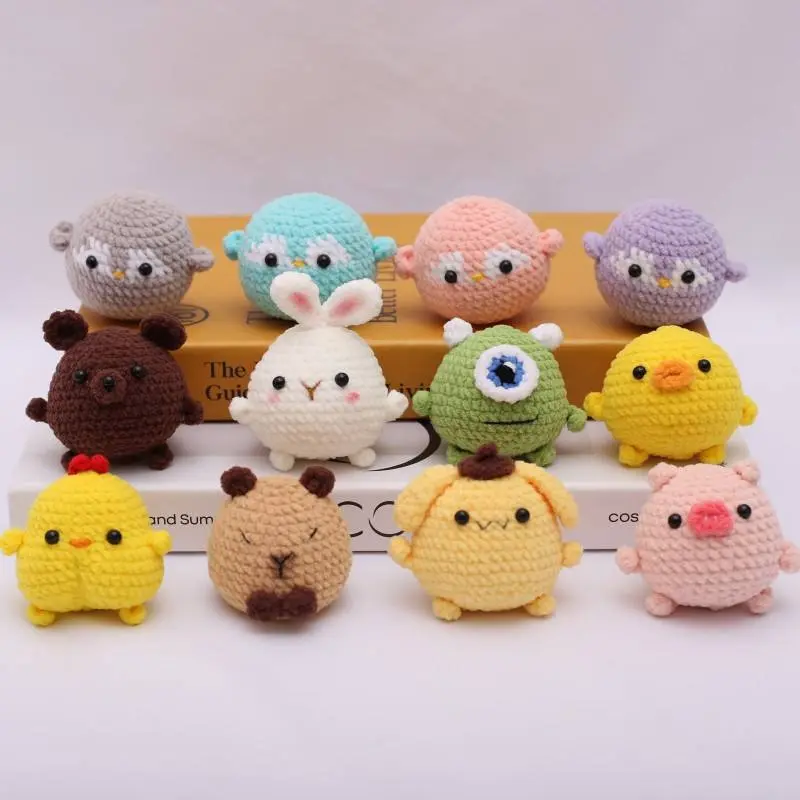
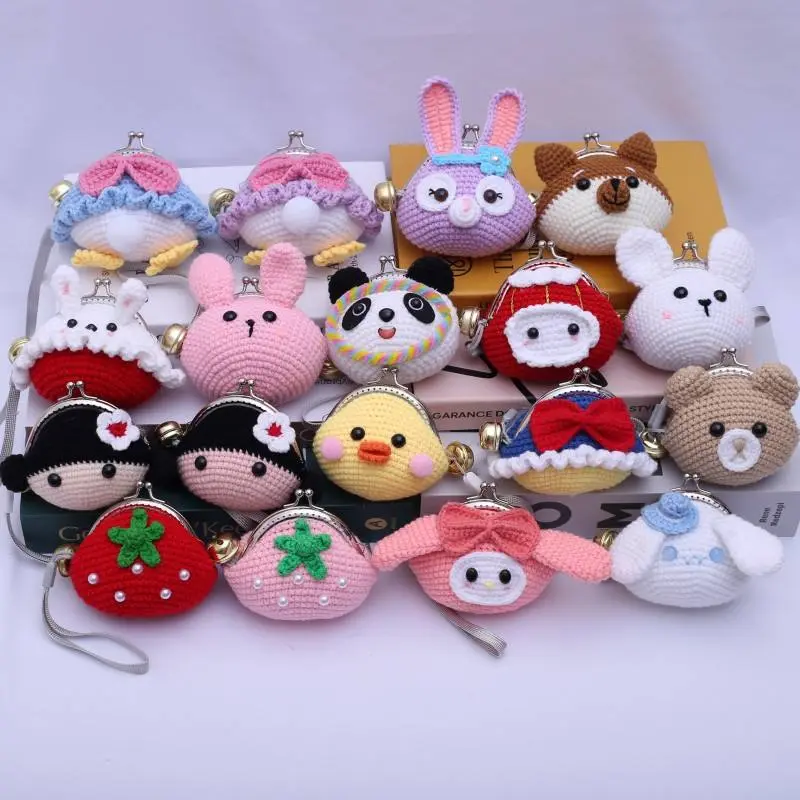
The product category here is straightforward: small handmade crochet or knit plush ornaments, decorative figures, or toy-like collectibles. The visible pieces are palm-sized, round, and compact, with soft yarn exteriors, stitched facial details, and plastic safety eyes. Several character styles appear in the product set, including bird-like, bunny-like, chick-like, bear-like, one-eyed monster-like, and pig-like forms. That mix tells you a few useful things about the item family. First, it is meant to be visually approachable rather than realistic. Second, it works best as an impulse-buy item or display piece. Third, the assortment strategy matters just as much as the individual figure design.
In practice, these products often fit a few buying channels:
Common use cases
Decorative tabletop or desktop figures
Gift shop merchandise and souvenir counters
Seasonal home décor
Children’s novelty collectibles, where appropriate and compliant
Craft-market or handmade-style retail assortments
Small promotional gifts where the brand wants something softer and friendlier than a hard plastic item
The last point is worth pausing on. A crocheted figure has a different emotional register from a printed keychain or resin figurine. It feels less industrial. That can be a strength, but it can also be a limitation if your brand needs a crisp, premium look. Buyers should be honest about that before they source.
What to ask a supplier before you place an order
A good Crocheted Products Supplier should be able to answer practical questions without hedging. Some answers may be specific to the product line, while others depend on your target market and order format. You do not need a wall of jargon; you need clear, working information.
Start with the basics: are the products finished goods, or are they supplied as craft kits? The available product information suggests they may be sold as craft set items or finished decorative pieces, but that should be confirmed directly. That distinction changes everything, from packaging to labor to end-user expectations.
Then ask about structure. These small figures appear to use a soft yarn or crocheted thread exterior with a stuffed interior. The faces rely on stitched details and visible plastic eyes. Those design choices affect durability, appearance, and potentially compliance requirements depending on the market. If the buyer expects a child-safe product, the eye attachment method and seam quality become much more important than they would for a shelf ornament.
Finally, ask how the assortment is handled. The image shows roughly ten distinct figures with multiple colorways. If you need SKU-level control, you should know whether each character is available separately, whether color can be customized, and whether the supplier can keep the set visually balanced across production runs. In small plush-style goods, consistency across a collection is often the make-or-break issue.
Manufacturing realities: handmade look, repeatable output
The challenge with Custom Crocheted Products is that the best visual qualities are often the hardest to standardize. A looped knit surface has charm because it is textured and slightly irregular. But buyers still need repeatability. The article data suggests a likely manufacturing process involving crochet or hand-knitted craft production, possibly machine-assisted yarn work plus hand assembly for facial features and stuffing. That is a reasonable model for this kind of item, though the exact method is not verifiable from the image alone.
For sourcing purposes, the important point is this: craftsmanship and process control need to coexist. If the supplier is making small animal or cartoon-like figures with protruding ears, feet, or side nubs, the shaping must be controlled enough that one batch does not look like a different product family from the next. This is especially true if you plan to mix bird-like, bunny-like, chick-like, bear-like, and monster-like forms in one retail display.
A buyer should also look closely at stuffing distribution, eye placement, and stitch tightness. These are the details that affect shelf appeal. A figure can have excellent color and still look off if the face is slightly crooked or the body fill is uneven. That is not a theoretical complaint; it is the sort of thing store buyers notice immediately, even if they do not say it out loud.
Selection criteria that matter more than price
Price matters, naturally, but it is not the first filter for this category. In crocheted decorative products, the visual standard and the intended audience usually matter more.
1. Character clarity
A small crocheted figure has only a few inches of visual surface to do its job. If the ears, wings, feet, or facial expression are too subtle, the product becomes generic. If they are too exaggerated, it can look less refined. The best suppliers know where that line sits.
2. Finish consistency
Matte, fabric-based finishes tend to photograph well and feel warm in hand. But yarn texture also means slight variation is normal. Ask what kind of variation is acceptable and how the supplier handles batch matching for colors and facial features.
3. Safety and age positioning
This is the caution buyers sometimes skip. Visible plastic eyes and small decorative parts may be fine for certain display items, but they may not be appropriate for all children’s uses. If the figures are intended as toys, compliance and age grading need to be confirmed separately. Do not assume a cute plush item is automatically safe for every channel.
4. Packaging and presentation
For shelf-ready retail, packaging matters nearly as much as the figure itself. Small crocheted items can be damaged or deformed in transit if packaged loosely. Ask whether the supplier can support individual packaging, display trays, or bulk packing without flattening the shape.
Common sourcing mistakes with crocheted figures
One common mistake is treating these products like mass-produced plastic novelties. They are not. Even when production is organized and efficient, the material behavior is different. Yarn compresses. Stitch direction shows. Color saturation varies by lot. If your team expects injection-mold precision, you will likely be disappointed.
Another mistake is over-customizing the first order. Custom Crocheted Products can be adapted in many ways, but too many changes at once make it harder to control cost and consistency. It is usually smarter to lock down one body shape, one face style, and a manageable color range before expanding into a broader line.
A third mistake is failing to define the product’s role. Is it décor? A collectible? A children’s novelty item? A gift add-on? Those categories overlap, but they do not use the same specifications. A buyer who knows the channel will ask better questions and get fewer surprises.
Practical buyer advice for a first order
If you are sourcing from a Crocheted Products Supplier for the first time, begin with a narrow assortment. The product set shown here already suggests a flexible family of designs, but a smaller initial range helps you evaluate workmanship, color control, and customer response before scaling.
Request samples if possible, then inspect them under ordinary retail lighting rather than under a photography setup. That may sound like a small thing, but it is where many soft-goods samples either win or lose. A figure that looks charming on a bright white background can look less polished on a store shelf beside competing products.
You should also think about replenishment. Handmade-style products can be harder to restock quickly than factory-molded goods. If your sales are seasonal, leave room for lead-time variability in your buying plan. That is just prudent sourcing, not pessimism.
FAQ
Are these crocheted figures usually sold as toys or décor?
They can be either, but the intended use should be confirmed before purchase. The visible design suggests decorative or novelty applications, with possible toy use depending on compliance and construction.
Can Custom Crocheted Products be color-matched?
Often yes, within practical limits. Yarn-based goods can usually be customized by colorway, but exact matching should be checked through samples and production confirmation.
Are all crocheted products handmade?
Not necessarily. Some may be fully handmade, while others may use machine-assisted methods with hand assembly. The exact method should be verified with the supplier.
What makes this product family attractive for retail?
The soft texture, compact size, and character-driven design make these items easy to merchandise as giftable or collectible products. They are visually warm and relatively low-pressure for the shopper.
What a good next step looks like
If your team is comparing suppliers, start with a short spec sheet instead of a long wish list. Define the character family, intended use, packaging needs, and any age-related constraints. Then ask the Crocheted Products Supplier how they manage consistency across small figures and whether they can support the exact assortment you need.
That approach saves time and usually surfaces the real issues early. With crocheted products, the difference between a charming retail item and a frustrating sourcing problem often comes down to a handful of details that are easy to overlook on a first look. Get those details right, and the product line can do exactly what buyers want it to do: feel handmade, look coherent, and sell without explanation.