
Punch Needle Factory: What Buyers Actually Need to Know Before They Source Kits
If you are evaluating a Punch Needle Factory, you are usually not just buying a craft item. You are deciding how a retail-ready DIY kit will look on the shelf, how easy it will be for a beginner to understand, and whether the finished piece will feel worth keeping instead of abandoning halfway through. That matters because punch needle products sit in a difficult middle ground: they have to be simple enough for casual crafters, but polished enough to sell as a giftable home craft project.
In practical sourcing terms, the job is to find a Punch Needle Supplier that can assemble a complete, attractive package without creating confusion for the end user. A kit that looks charming but leaves out key tools can trigger returns, bad reviews, or customer complaints that the seller could have avoided with better packaging planning.
What a punch needle DIY kit is really selling
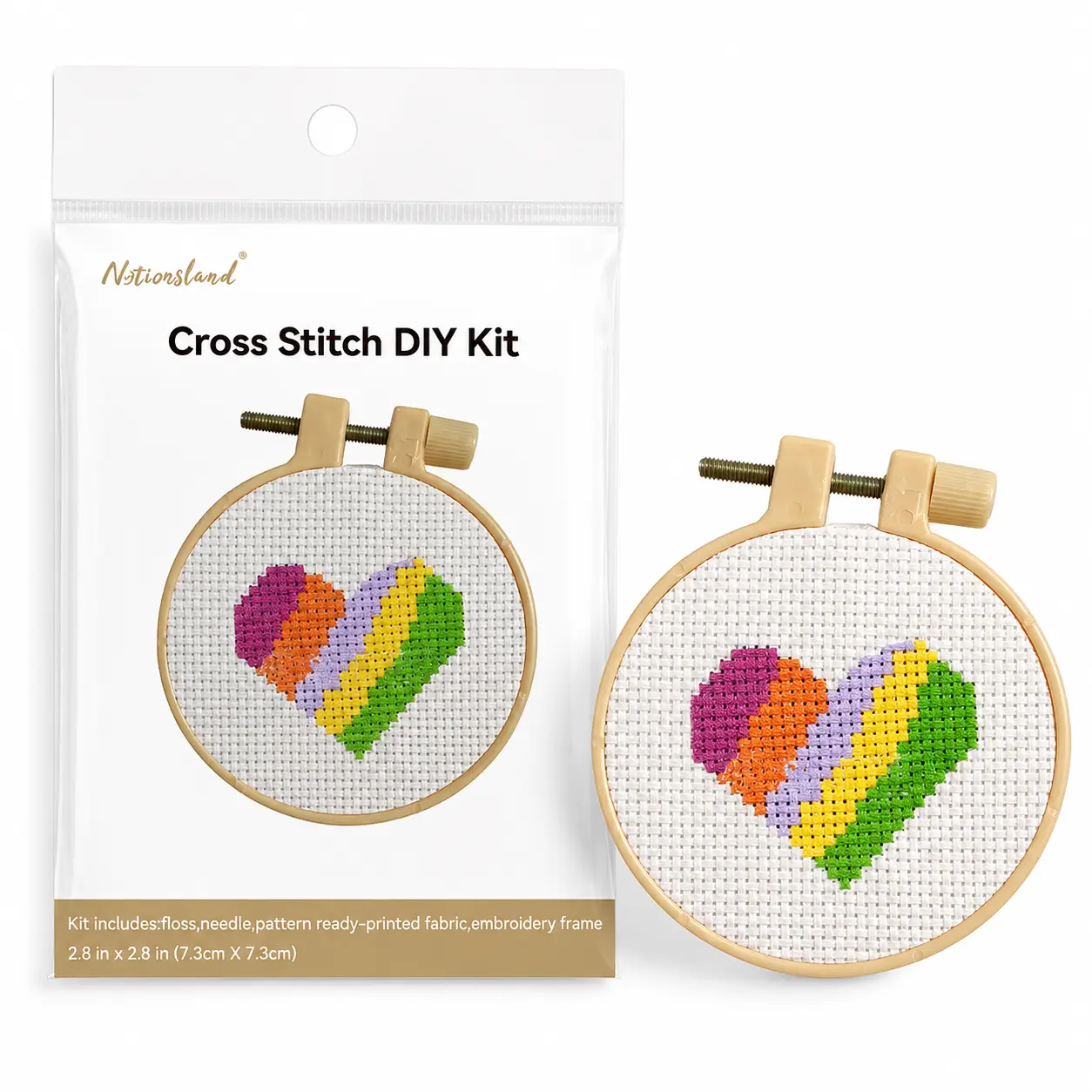
The product described here is a punch needle DIY embroidery and craft kit for home handcrafting and decorative textile making. The visible format is straightforward: a clear plastic hanging package, a printed front card, a round wooden embroidery hoop with a metal tightening screw, and a piece of ready-printed fabric stretched in the hoop. The sample on the package shows a floral motif in red or pink and green thread, which makes the product immediately legible even before the buyer opens it.
That visual clarity is not a small detail. In retail, the buyer is often making a quick decision from a peg display, a marketplace thumbnail, or a small product listing image. A floral punch needle kit communicates a softer, decorative use case than a more abstract textile craft. It tells the customer what they can expect to make, which is usually half the battle.
The package also states an 8 in x 8 in size, or 20 cm x 20 cm. That puts it in a compact, beginner-friendly format that works well for home décor accents, small wall pieces, or gift projects. It is not a large-format artisanal textile panel; it is a manageable craft size that fits the casual hobby market.
Why packaging details matter as much as the craft itself
For this category, packaging is part of the product experience. The clear hanging bag and printed insert do more than protect the contents. They act as the sales pitch. The buyer sees the hoop, the fabric, the thread, and the finished floral example all at once. That reduces uncertainty, which is valuable in craft retail where many customers are beginners or occasional makers.
There is one practical caveat worth noting: the package says the punch needle and threader need to be bought separately. That is not necessarily a flaw, but it is the kind of detail that needs to be obvious. If a product is marketed as a complete project and the tools are missing, the customer feels misled. If the listing clearly says what is included and what is not, the kit can still perform well.
Sourcing teams should pay close attention to this distinction. Some buyers want a nearly finished bundle with everything needed to start immediately. Others are perfectly happy to buy a refill-style kit as long as it is clearly labeled. The wrong assumption here can turn a simple craft item into a service problem.
Key components buyers should review
The visible structure of the kit suggests a few items that deserve extra scrutiny during sourcing and product development.
1. The embroidery hoop
The hoop appears to be light-colored wood with a metal tightening screw. That is a standard, familiar choice for needlework kits because it is easy to understand and visually appealing. Still, the buyer should care about consistency: if the hoop is loose, rough at the edges, or uneven in finish, the kit feels cheap even if the design is good.
2. The ready-printed fabric
The kit includes pattern-ready printed fabric. That is helpful for beginners because it removes a big point of friction: people do not have to transfer a design before they start. For a consumer kit, that is often the difference between “I will try this tonight” and “I will put it away.”
What is not shown, and should not be assumed, is the exact fabric composition. Buyers should verify whether the cloth holds the punch needle loops consistently and whether the print is clear enough to guide stitching without overwhelming the design.
3. Floss and color coordination
The package mentions floss, and the sample design uses a simple floral color palette. That is usually a sensible retail choice because it keeps the kit approachable. A beginner is less likely to get lost in too many shades, and the finished object still looks decorative enough for display.
4. Missing tools
The fact that the punch needle and threader are sold separately needs to be part of the sourcing conversation from the start. If a retailer wants a true all-in-one kit, the factory has to support that. If the business model is modular, then the product page and packaging must be very explicit.
How to evaluate a factory for this product category
A Punch Needle Factory for this kind of kit is not the same as a factory that only makes textiles or only makes plastic packaging. It needs assembly discipline. The kit depends on coordination between printed materials, textile components, hoops, and retail packaging.
When sourcing, it helps to ask a few direct questions:
- Can the factory assemble the printed fabric, hoop, floss, and insert cleanly without damaging the fabric surface?
- Are the packaging dimensions stable enough for hanging display?
- Does the factory understand the difference between a finished craft sample and the actual contents of the box or bag?
- Can it keep visual presentation consistent across batches?
Those questions sound basic, but they are the ones that expose weak operations. Craft kits are often judged by small defects: a wrinkled insert, a shifted fabric print, a hoop that does not sit straight, or floss that looks messy inside the package. Retail buyers notice those things quickly.
Where this kind of kit fits in the market
Punch needle kits like this one sit in several sales channels at once. They work as hobby products, starter projects, giftable items, and decorative craft merchandise. That flexibility is useful, but it also means the product has to satisfy different buyer expectations.
For home crafters, the appeal is the mix of relaxation and visible progress. Punch needle work is tactile and relatively forgiving, which makes it attractive to beginners. For retailers, the appeal is shelf friendliness. The clear package and sample image create a neat visual story without requiring heavy explanation.
For sourcing managers, the appeal is simpler: the product is compact, shippable, and easy to merchandise if the contents are controlled. The risk is not complexity so much as inconsistency. One batch that looks tidy and another that arrives with poor packaging tension can create a quality perception problem quickly.
Common mistakes when buying punch needle kits
The most common mistake is assuming all craft kits are interchangeable. They are not. A punch needle DIY kit depends on presentation and clarity as much as on materials. If the printed pattern is faint, the beginner struggles. If the hoop is flimsy, the user feels the kit is low value. If the included contents are not clearly stated, the seller ends up answering preventable questions.
Another mistake is overlooking tool separation. Since the package says the punch needle and threader are not included, buyers need to decide whether that suits their audience. Some customers already own tools and want refills. Others do not. A mismatch here can quietly hurt conversion.
A third mistake is treating the floral sample as a minor detail. In reality, that sample is the product’s promise. It sets expectations for color balance, complexity, and final use. If the finished example is attractive, the kit has a better chance of moving from “nice idea” to “I want that.”
Practical advice for sourcing and merchandising
If you are building a retail assortment, think about how the kit will be sold rather than only how it will be made. The 20 cm x 20 cm format is useful because it is small enough for impulse-friendly merchandising and simple enough for many casual hobbyists. It also makes bundle logic easier if a retailer wants to pair the kit with a separate punch needle or threader.
For online listings, the first image should probably show the finished floral sample and the included contents clearly. Do not bury the note about separate tools. That detail should be visible before checkout, not discovered after the package is opened.
For physical retail, hanging pack presentation matters. The clear plastic bag is functional, but only if the insert remains flat and the visual composition is orderly. Otherwise the kit can look like commodity packaging instead of a thoughtful DIY project.
FAQ for buyers comparing suppliers
Is this a beginner-friendly product?
It appears designed for accessible home crafting, especially because the fabric is pre-printed and the design is simple. That said, buyers should confirm exactly how much instruction is included before calling it beginner-ready.
Does the kit include everything needed to start?
Not according to the package text provided. The punch needle and threader need to be purchased separately, so that should be reflected in both sourcing decisions and product copy.
Why does the floral design matter?
Because it anchors the product visually. A floral motif is easy to understand, decorative, and broadly usable for home décor. It helps the kit sell itself quickly.
What should a buyer verify with the factory?
Confirm the included components, packaging presentation, consistency of printed fabric, and whether the factory can maintain a neat retail-ready assembly across orders.
A sensible next step
If you are comparing suppliers, ask for a sample that shows the actual packed contents, not just a polished product photo. That is the simplest way to see whether the Punch Needle Supplier understands retail expectations or only the craft itself. The difference shows up in the details: how the hoop sits, how the fabric is presented, and whether the package makes the project feel easy to start.
For this category, the right factory partner is the one that can balance visual appeal, honest content labeling, and consistent assembly. That combination sells better than a clever design alone, and it avoids the kind of small disappointment that can sink an otherwise attractive craft kit.